
Rooted, but Not Replanted
Finding Myself Beyond the Fences That Raised Me

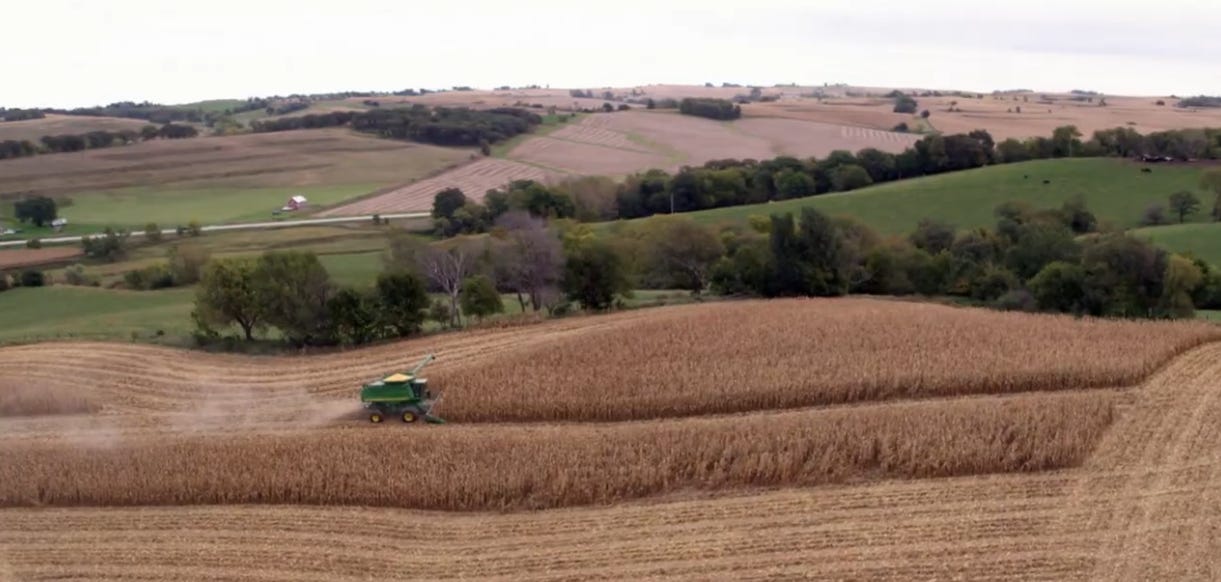
Growing up on a farm comes with an unspoken expectation familiar to anyone raised in a similar world — that despite whatever dreams you quietly nurture, it’s assumed you’ll one day step into your parent’s boots and keep the legacy alive.
My childhood lived under that same shadow: “This will be yours one day.” It was a phrase said casually, like a fact of nature. But even as a kid, I felt something stir inside me, something uneasy. I knew I loved the land, but I also knew I didn’t want to be bound to it in the same way my dad was.
I was imaginative, always wandering, exploring the acreage as if it were a world to escape into rather than one to maintain. I’d get lost in books far more easily than in rows of corn. My dad, on the other hand, was everything a farmer is expected to be: hardworking, focused, practical, determined. He was steady in ways I never felt. He worked the land because it was his identity. I admired him deeply — but I didn’t see myself in that same mold, no matter how hard I tried to force the fit.
As I got older, the gap between who he was and who I was becoming widened. That gap created strain neither of us knew how to name at the time. He carried the belief that passing down the farm was part of securing the family’s future. I carried the fear that taking it on would mean losing myself. Neither of us wanted to disappoint the other, but both of us were quietly wrestling with expectations that didn’t match reality.
I didn’t know how to explain the guilt. The way I felt like I was letting him down simply because my heart didn’t beat the same way his did for the fields, the livestock, the seasons that dictated the rhythm of his life. And he didn’t know how to explain his hurt — or his worry — that the life he’d poured everything into wouldn’t continue in the way he had imagined.
Finding my own identity meant breaking from the assumptions of my upbringing, and that process was messy. It meant arguments that felt circular, silence that felt heavy, and distance that neither of us wanted but didn’t quite know how to bridge. I kept searching for who I was outside of being a “farm kid,” and in doing so, I think he sometimes wondered if I was rejecting the life he had built, even though that was never my intention.
But growth — real, honest growth — has a way of demanding clarity. Eventually, we both had to face the truth: we didn’t share the same desires, passions, or purpose. And that fact wasn’t a betrayal. It was just… the truth.
Accepting that truth was its own form of healing. For him, it meant recognizing that legacy isn’t only carried through land. For me, it meant embracing that honoring my father didn’t require becoming him. We began meeting each other with fewer expectations and more understanding. We learned to listen without assuming. We learned to appreciate each other’s worlds without needing to inhabit them.
Today, years later, we stand closer than we ever did in the seasons when we were trying to shape each other into versions we were never meant to be. He still sees the farm as home, and I still see it as the place that raised me — not the place I was called to remain. And somehow, both can be true without either of us losing anything.
What I’ve learned is that identity is not inherited; it’s discovered. And love grows best not in the pressure to be the same, but in the space to be different.
As I look back now, I’m grateful for the journey — for the wrestling, the clarity, and the reconciliation. The farm will always be part of my story, but not because I took it over. It’s part of my story because it taught me who I was, and who I wasn’t… and because, in all the uncertainty of choosing a different path, it gave my dad and me the chance to build something even stronger than legacy: understanding, respect, and a relationship that has learned to flourish in soil all its own.