
The Seasons We Live In
Learning to Wait When Everything Around Us Says Hurry

Patience.
It is something I struggle with in nearly every area of my life. I know that when I practice patience, the outcome is usually better, yet my desire for immediacy often overrules any inclination to slow down and wait. I live in a world shaped by instant gratification, where nearly every inconvenience has been engineered out of daily life. Microwaves, streaming services, mobile apps that deliver groceries within hours, and my personal nemesis—waiting in the mobile order line at Chick-fil-A for more than five minutes. I am human after all.
But I did not grow up in that world. I grew up in the quiet stretch of northwest Iowa farm country, where time moved differently. Our nearest grocery store sat twenty miles away, which meant twenty minutes in the car just to buy milk and bread. Walmart was another twenty minutes. Restaurants? Also twenty. And if we wanted to go to the “big city”—the one with a Target or a decent mall—we drove for an hour past endless fields that stretched as far as the eye could see.
Life in the country taught me many things, but the lesson that keeps echoing in me, even years later, is the art of patience. Now, living in the rhythm of the city, I catch myself growing irritated when my Americanized expectation of immediacy goes unmet. But when I take a breath and let my mind drift back to the gravel roads, the acres of green, and the farmhouse I grew up in, I remember the simple beauty of waiting. On the farm, patience is not an abstract virtue—it is survival, routine, and a practiced form of trust.
The clearest example is the planting and harvesting of corn and soybeans. Every spring, my dad would pull the machinery from the shed: the planter, tractors, auger, tiller, and cultivator. Weeks of preparation followed. Nothing about the shift from winter to spring was easy. The soil needed to be worked, the fields needed smoothing, seeds had to be carefully placed. The long hours and early mornings weren’t just tradition—they were necessity. The success of not only the spring but the entire summer and fall hinged on what happened in those few crucial weeks.
Then came the waiting.
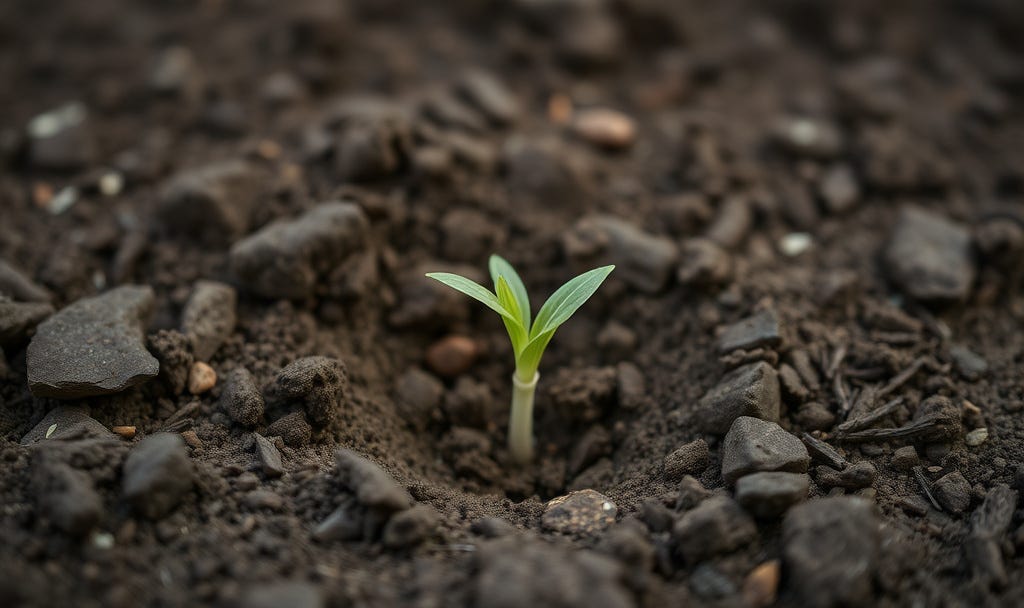
You plant a seed in cold dirt in April or May, and then you pray. You hope that seed breaks through the surface. You hope it survives storms, drought, frost, pests, disease, and every other uncontrollable force. You wait six or seven months before you know whether the work paid off. It is humbling, unsettling, and faith-building. Farming is, at its core, an act of trust in something you cannot see.
Life is often the same way. We plant seeds—dreams, decisions, new habits, relationships, prayers—and yet we want the harvest now. We want growth without the middle season of work, waiting, and uncertainty. We want success without the process that makes us ready to handle it.
And that is where impatience steals from us. Wanting everything immediately means we miss what the waiting is meant to teach us. Growth does not happen in a moment—it happens in the in-between.
Maybe that’s why God gave us seasons in the first place. Nature reminds us, repeatedly, that hurried growth does not last. Winter calls us to rest. Spring invites us to plant. Summer demands tending. Autumn rewards the patient with a harvest. And every year the cycle begins again.
The discipline of patience is not for those seeking constant immediacy. It is learned in the refining moments of life—through disappointments, setbacks, long waits, and slow progress. It is the maturity of understanding that just because something has not come yet does not mean it never will. Or that it may arrive in a form we never expected.
Anything reaped too early is bitter, underdeveloped, and often unusable. Time, however, heals, matures, deepens, and prepares. Time does not forget what was sown.
So if you find yourself waiting, longing, or frustrated with the season you are in, consider this: perhaps you are not meant to harvest yet. Perhaps this is the season to prepare, plant, or tend. The harvest will come, but only when it is ready—and when you are too.
Reflect on what this season is asking of you. Prepare now so that when the time comes, you are ready to gather the fruits of your patience.
The farming analogy realy hits home. We're so conditioned by instant gratification that we forget growth requires those in-between seasons you mentioned. The idea that anything reaped too early is bitter resonates deeply. I think a lot of modern anxiety comes from trying to harvest before we're ready or before what we planted has had time to mature.
Beautiful essay! You hit the nail on the head. Patience isn’t easy … I know I struggle with it at times:) But nothing worth having comes easy .. or fast!